Show news for a region of your choice (mostly Australian news).

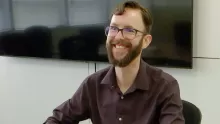
Oliver Hetherington-Page says his experience of autism doesn't fit the pop culture mould

By bobb |

I'm not Sheldon Cooper.

I am, however, autistic, which means I'm constantly compared to him.

This is ironic because according to the producers of The Big Bang Theory, Sheldon Cooper isn't actually autistic.

And yet my autism is constantly compared – and seemingly failing to live up – to this fictional character.

More celebrities are coming out as autistic. That makes a huge difference.

By bobb |

Zack Budryk

Anthony Hopkins, Wentworth Miller and others are showing us that autism is more varied than it once seemed to be.

In late July, actor Wentworth Miller of “Prison Break” and “Legends of Tomorrow” posted an image of a white square to Instagram, accompanied by the revelation that he had been formally diagnosed as autistic a year before.

‘It’s life or death for us’: The struggle for this mother to get her kids with autism vaccinated

By bobb |

By Eden Gillespie

A mother of five autistic children from regional NSW told The Feed she’s struggled immensely with getting them vaccinated. With the children still unvaccinated, and a severe asthmatic herself, she’s fearful about the state’s plans to open up in October.

NSW’s reopening has been described as the ‘light at the end of the tunnel’ but as severe asthmatics and the parents of five children with autism, Casey* and her husband are terrified of where the eased restrictions could leave them.

creating trust in the NDIA is about more than the so-called Independent Assessments

By convenor |

Minister Reynolds has the NDIA and disability representatives working on rebuilding trust. The NDIA and some parts of the disability sector seem to think this is just about recent conduct.

For the autism sector, there are deeper issues from the outset.

Here is a letter from  A4 to the Minister briefly describing some of the history and issues.

Are We Giving Autistic Children PTSD From School?

By bobb |

When we don't understand autistic kids we create a toxic environment for them.

Posted August 31, 2021 | Reviewed by Tyler Woods

Key points

  • We must understand the behavior of autistic children to help them.
  • Responding without understanding diminishes the personhood, self-esteem and trust of autistic kids.
  • Providing an environment sensitive to the needs of autistic students benefits all students.

For most autistic children, school can be a toxic environment. Working on the advice of experts, school staff aim to have autistic children’s behavior conform to neurotypical expectations. The more a child is indistinguishable from mainstream peers, the more successful the school intervention is believed to be.

Coalition has made a mess of NDIS, says Judy Fischer

By bobb |

The widow of former deputy prime minister Tim Fischer has accused the Coalition of mismanaging the National Disability ­Insurance Scheme, which she says is shrouded in secrecy and too ­important to fail.

Judy Brewer, a high-profile disability sector advocate whose son Harrison has autism, said she was angry the ­government appeared to be blaming people with disabilities for cost blowouts when it was likely the $24bn scheme’s financial assumptions were wrong.

NDIS FOI 21/22-0100 - misinformation and untruths

By convenor |

The NDIA did not respond to a number of A4's concerns. Issues of particular concern were:

  • "misinformation and untruths" from the NDIA's CEO to NDIS participants about the assessment tools that were planned for functional assessment of autistic NDIS participants for the so-called Independent Assessments, and
  • inexpert and misguided advice from the NDIA's Independent Advisory Council (IAC) about early intervention for autistic children.

The NDIA did not respond to A4 about its concerns.