
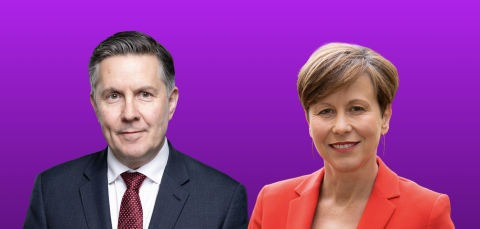
Dear NDIS Ministers Butler and McAllister
I write again to warn you about the rubbish that the AFR publishes in relation to autistic Australians. The article, Why a $10b autism bill is forcing a rethink of the NDIS, again misses the point that Australia's autism challenge need to be taken seriously and addressed properly.
The Prime Minister's vow "to wind back the ballooning growth of the NDIS" just makes the problem worse - it increases autism-related support costs in the future. Government needs better plans that are based of evidence and data.
A4 is especially concerned by:
“The bar to get a diagnosis of autism is incredibly low,” said Mike Freelander, a Labor MP and paediatrician who headed a parliamentary committee that investigated Thriving Kids. “We are diagnosing people who have a bit of anxiety and are maybe a bit quirky with autism. We have made the bar far too low.”
The diagnostic criteria for autism, more formally Autism Spectrum Disorder, are described in the DSM-5 and DSM-5-TR. They require that diagnosing clinicians document an autistic person's "need for support" in two areas: a) communication and social impairment, and b) behavioural impairment. A valid diagnosis is not given with "a bit of anxiety and are maybe a bit quirky". From what we observe, the NDIS only accepts participants who clinicians formally describe as having "substantial" need for support - they have a documented Level 2 or 3 support needs.
The Hon. Dr Mike Freelander MP, who is a paediatrician, should know this ... especially since he headed the Thriving Kids inquiry.
Further, if government really believes that there is substantial under- or misdiagnosis of autism, then they should confirm this. The NDIS could re-diagnose a small random sample of applicants with high quality diagnostic procedures to determine the level of misdiagnosis. Or there are other ways they could test or address their misdiagnosis hypothesis. That they do not do so indicates that they do not want to know what is actually happening.
The article also says:
The Grattan Institute on Wednesday said less than 20 per cent of NDIS participants with autism are aged under nine and eligible for the Thriving Kids program, leaving more than 250,000 people with autism, or $9 billion of spending, still on the scheme, with numbers growing.
Kicking autistic young kids out of the NDIS means they will come back needing support later. And if government's early investment in autism is insufficient or ineffective then the disability support they need when they return to the NDIS (or enter the NDIS when they are older) will cost even more. The real challenge for government is not saving money now, it is to deliver supports that are the most cost-effective in the long-run. And those supports do not come from knee-jerk cost cutting.
My recent email to you containing A4's Media Release (see https://a4.org.au/node/2772) also questioned the number of participants that the NDIS expects will be moved to Thriving Kids ... and whether those plans properly address the autism challenge in Australia.
Autism Aspergers Advocacy Australia (A4) has known for a very long time that autism is a rising challenge for governments. But governments' persistent refusal to recognise and address the problems properly means that the autism problems will keep getting worse.
--
Bob Buckley
Co-convenor, Autism Aspergers Advocacy Australia (A4)
website: http://a4.org.au/
A4, a recognised disability representative organisation (DRO), advocates for autistic people, their families, carers and associates. A4 is internet based so that Australians anywhere can participate in and contribute to A4's advocacy for autistic people, their carers and allies.
A4 recognises the Traditional Owners of lands in Australia; we respect their elders past, present and emerging. Sovereignty was never ceded.
Recipients of correspondence from A4, especially politicians and government officials, are all subject to A4's policy on unanswered questions: see http://a4.org.au/node/1419.
The autism issue is that autistic people just don't deliver on the plans, dreams and expectations in other peoples' heads.
| Attachment | Size |
|---|---|
| NDIS_costs_blow_out_as_autism_diagnoses_surge_to_$10_billion_annually,_overwhelming_the_system.pdf (1.61 MB) | 1.61 MB |
| more_AFR_rubbish_about_autism.pdf (105.69 KB) | 105.69 KB |