
Clare Rowe, Psychologist.
Opinion
We must have an honest conversation about a condition that can describe both a successful media personality and a person who will require lifelong care and supervision.
Grace Tame’s new ABC podcast on autism has sparked predictable debate. Much of that discussion has focused on Tame herself, her advocacy and whether she is an appropriate public figure [https://www.afr.com/politics/i-m-a-jewish-woman-i-want-grace-
tame-s-australian-of-the-year-stripped-20260212-p5o1mt] to host such a program. I suspect
that conversation misses another important issue.
Presented with Tame as the latest face of the neurodivergent diagnosis, Australians
may experience a moment of surprise. She does not resemble what most people
instinctively imagine when they hear the word “disability”. She is articulate,
successful, independent and highly influential. She hosts podcasts, writes books
and shapes public debate.
It reflects a growing tension in the way autism is understood and presented in
modern Australia.
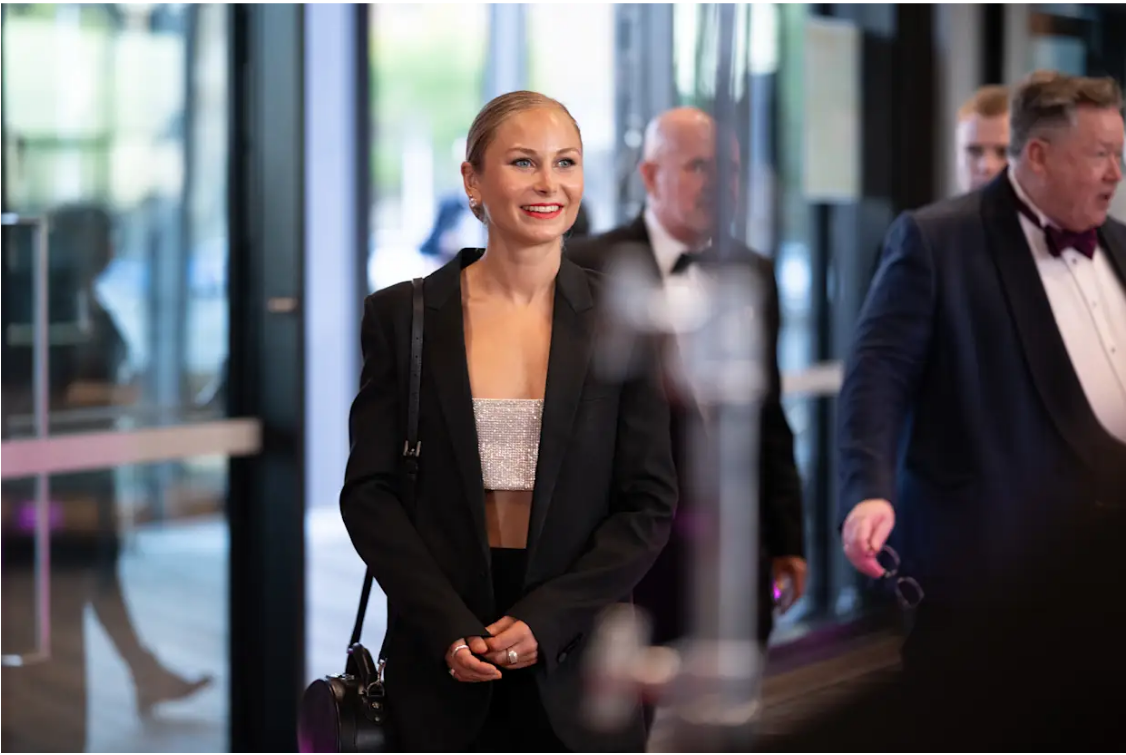
No one can seriously deny that what we now call autism has expanded enormously over recent decades. The public is being asked to make sense of a diagnosis that now covers people with vastly different levels of impairment, support needs and independence. Even the title of Tame’s new podcast, Autistic AF, complete with its slick branding and social-media-friendly aesthetic, speaks to a broader cultural shift. Autism is increasingly framed not only as a disability, but also as an identity and form of self-expression to be embraced.
I know autism advocacy groups will bristle at that observation. They will tell me there is no such thing as “mild autism” and that support needs are more complex than a simple scale from mild to severe. Fair enough. But let’s not pretend ordinary Australians don’t recognise that there are enormous differences between presentations.
Try telling the mother of a 1.82-metre, non-verbal autistic teenage boy who requires round-the-clock supervision because he may become violent that there is no meaningful distinction between levels of severity. She knows it. Her family knows it. And deep down, most of us know it, too.
The challenge for policymakers, clinicians and the broader community is how we have an honest conversation about a condition that can describe both a successful media personality hosting a national podcast and a person who will require lifelong care and supervision. Pretending those realities are even remotely similar does not help anyone.
As a psychologist, I have no difficulty accepting that the rise of autistic self- advocates has corrected misconceptions and helped many people make sense of experiences that were previously misunderstood. At the same time, I have become increasingly concerned that the autism conversation is being shaped by a relatively narrow group of voices.
The autistic Australians most visible in public life are often those most capable of advocating for themselves. They appear in the media, influence policy discussions and help shape public perceptions of what autism looks like. Their experiences matter, but they are not the only experiences that matter.
Over the past decade, I have worked with families caring for children with profound intellectual disabilities, severe communication difficulties and complex behavioural challenges. These are parents whose lives revolve around therapy appointments, school battles, safety concerns and uncertainty about the future. Many have given up careers. Some have not slept properly in years. Their children are not likely to ever live independently.
One of the great ironies of modern disability advocacy is that the people with the highest support needs often have the least influence over the conversations that shape disability policy.
Australia is increasingly being asked to hold two ideas simultaneously. The first is that autism should be understood primarily as a difference in normal human variation rather than a disability. The second is that autism has become the largest category within Australia’s disability insurance scheme and a major driver of its growth.
Increasingly, I hear concerns from families and clinicians who believe the scheme is drifting away from those with the greatest needs. I hear stories of parents caring for profoundly disabled children fighting repeated battles to justify essential supports, while watching eligibility expand elsewhere.
Australians are remarkably generous when they believe support is reaching those who genuinely need it. But support for any publicly funded system depends on a shared sense that resources are being allocated fairly and that difficult decisions are guided by need rather than political pressure or advocacy influence.
The challenge extends well beyond autism. As governments attempt to control NDIS spending by shifting money between buckets (aka the elusive Thriving Kids Program), difficult questions emerge across a range of developmental conditions. If a child presents with a mild speech delay, should taxpayers fund speech pathology?
Perhaps they should.
There is a strong argument that early intervention can improve educational outcomes, workforce participation and long-term independence. If a relatively modest investment in childhood prevents more significant difficulties later in life, that may represent excellent value for both the individual and society.
However, we should be prepared to explain that rationale openly.
What outcomes are we seeking? What evidence demonstrates that public investment today will reduce future costs or increase future participation? At what point does a developmental vulnerability become a disability that warrants taxpayer-funded support?
These are not questions about whether people deserve help. They are questions about how a finite pool of public resources should be allocated.
For too long, discussion of the NDIS [https://www.afr.com/politics/federal/i-m-disabled-the-
last-thing-i-need-is-ndis-run-by-big-charities-20260603-p603p3] has been framed as a
contest between compassion and cruelty. That framing has discouraged honest
debate about thresholds, priorities and outcomes. Yet every sustainable public
system ultimately requires choices about what it can fund, what it cannot fund and
why.
Tame’s podcast is really just the catalyst for a much bigger conversation. The real
question is whether the people shaping disability policy are representative of those
with the greatest needs.
Because if there is one group of Australians we should be listening to more
carefully, it is not those with the loudest voices. It is those whose disabilities are so
profound that they often have no voice at all.
from https://ipa.org.au/latest-news/grace-tames-podcast-speaks-to-the-ndis-autism-paradox