Children with disabilities risk being misdiagnosed in order to receive school funding support

By convenor |

In Australia, children with disabilities only receive additional government funding if they fall into a recognised disability category. As a result, schools and parents often come under pressure to obtain the “right” diagnosis for their child. Such misdiagnosis carries a hidden cost.

NDIS may be ‘open to legal action’ on autism

By bobb |

Brisbane oncologist James Morton — an authority on early intervention — told The Weekend Australian there is a “very real risk” the agency responsible for the NDIS will leave itself open to litigation if it can’t settle the parameters of early intervention.

“The academics and the funding providers need to sit down and do a workshop and fix this,” he said.

Making sense of the common ‘disorder’ autism

By bobb |

The autistic brain is a beautiful mess. There are more synapses in this lump of grey matter than in an ordinary brain. It’s these connections between the brain’s neurons — which regulate signals — that orchestrate the overwhelming sensitivity to outside stimuli.

Noises are louder, smells are stronger, touch is more invasive, light is brighter. For the autistic person, there is a pervasive intensity to the experience of the world around them that makes living in it that much more difficult.

Lax diagnosis habits linked to surge in autism

By bobb |

PAEDIATRICIANS don’t necessarily follow guidelines for diagnosing autism, a lapse which may underpin Australia’s galloping increase in the disorder, an Australian study suggests. 

Autism spectrum disorder (ASD) is one of the most common diagnoses made by paediatricians after ADHD and specific learning disorders, researchers say.

But their study confirms not all of the physicians adhere to diagnostic recommendations for autism more than 50% of the time. 

NDIS provides basis for streamlining autism diagnoses

By Anonymous (not verified) |

Australia needs a better system for diagnosing autism in the wake of dramatically rising prevalence rates that The Weekend Australian correctly reports have contributed to a demand in the school system for support that is not available (“Crisis in the classroom”).

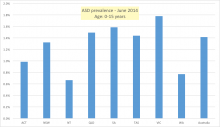
It is beyond dispute that the numbers of children diagnosed with autism spectrum disorder have risen considerably over the past three decades. This trend is not unique to Australia and is observed across the Western world.

Alarm at autism doctor shopping for diagnoses

By Anonymous (not verified) |

GPs should be given stronger guidance about how to diagnose autism to prevent “doctor shopping” by desperate families trying to access funding for their children that is tied to a medical ­definition, researchers say.

New, nationally consistent guidelines that crack down on fluid interpretations of the international Diagnostic and Statistical Manual (DSM-V) — the global yardstick for identifying a suite of mental disorders — would push down prevalence rates, which have been climbing dramatically in Australia for years.